Crioulo corn, also known as native or ancestral corn, is a broad term involving traditional varieties that have not undergone genetic improvement processes.
Originating in the Americas, particularly in Mexico, where it has been cultivated for millennia, it owes its diversity to the indigenous peoples who first domesticated and cultivated it. This early cultivation led to a wide array of varieties suited to various environments and climatic conditions.
Over the centuries, Crioulo corn spread across the Americas, cultivated by numerous indigenous cultures. Following the arrival of Europeans in the Americas, corn was introduced to other regions globally and underwent genetic modifications to suit new environments and agricultural demands.
Nevertheless, despite the proliferation of modern hybrid and genetically modified corn varieties, many indigenous communities and traditional farmers steadfastly cultivated and conserved Crioulo corn, thus safeguarding its original traits and genetic diversity.
DIVERSITY
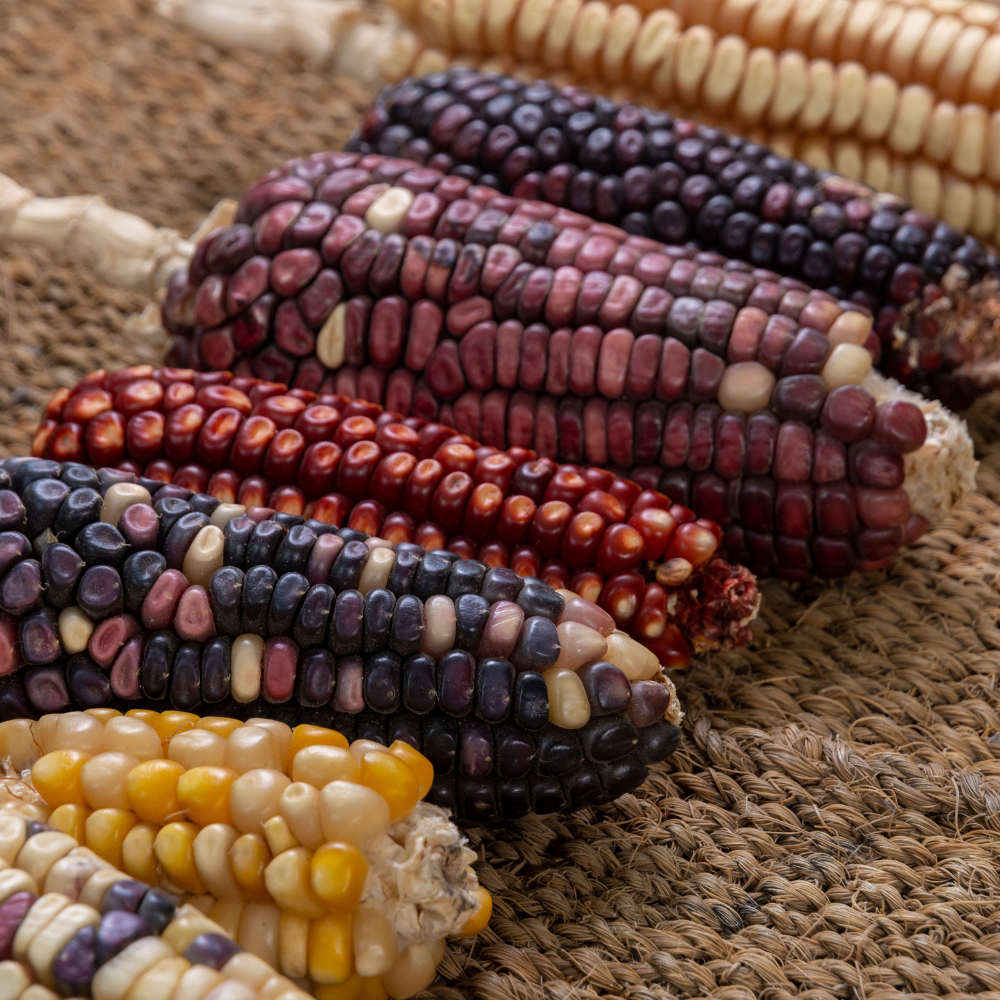
Crioulo corn involves a rich variety of types, each distinguished by unique characteristics in color, kernel size, flavor, and culinary versatility. Here’s an overview of some prominent varieties:
White Crioulo Corn: Known for its white kernels, this variety is commonly used in dishes like tortillas, tamales, and certain breads and cakes.
Yellow Crioulo Corn: With vibrant yellow kernels, this variety is popular for making polenta, popcorn, cornmeal, and various traditional dishes across different cultures.
Red Crioulo Corn: Featuring red or reddish kernels, this variety is prized for its distinct flavor and finds its way into dishes such as tortillas, tamales, and soups.
Purple Crioulo Corn: Characterized by purple or violet kernels, this variety adds both color and flavor to dishes such as tortillas, pancakes, and salads.
Blue Crioulo Corn: Sporting deep blue kernels, this variety is essential in traditional Mexican cuisine, used in dishes like tortillas, tamales, and enchiladas, and appreciated for its unique taste.
Multicolored Crioulo Corn: Some varieties exhibit kernels with a mix of colors, creating a visually striking effect. These types are often cultivated for their aesthetic appeal and are used decoratively as well as in diverse culinary applications.
ORGÂNICO / BENEFÍCIOS
The cultivation of organic Crioulo corn represents more than just producing food; it embodies a commitment to human health and environmental preservation. Opting for this agricultural practice yields a range of benefits that resonate across various facets of society.
Firstly, organically grown Crioulo corn is a nutritionally dense source compared to modern varieties, thanks to cultivation methods that eschew pesticides and synthetic fertilizers. These practices foster healthier soils and biodiversity, resulting in more nutritious foods that contribute to a balanced diet.
Moreover, organic cultivation eliminates exposure to harmful chemical residues, reducing risks associated with consuming pesticide-contaminated foods and ensuring a safer diet free from toxins.
Preserving biodiversity is another critical aspect. Organic Crioulo corn cultivation helps maintain plant genetic diversity, crucial for long-term food security and crop resilience in the face of climate change and pests.
From an environmental standpoint, organic farming practices promote the sustainability of agricultural systems. Techniques such as crop rotation, natural fertilizers, and integrated pest management enhance soil health, conserve water, preserve biodiversity, and mitigate negative environmental impacts.
Additionally, organic Crioulo corn cultivation often supports family and small-scale agriculture. By backing these producers, it fosters rural development, generates income, and empowers local communities.
Lastly, organic Crioulo corn is esteemed for its authentic flavor and superior quality. Grown in fertile, biodiverse soils, it offers a richer taste and more enjoyable texture, enhancing the gastronomic experience.
In essence, choosing organic Crioulo corn goes beyond the dining table; it signifies a conscientious decision benefiting human health, environmental sustainability, and the vitality of local agricultural communities.