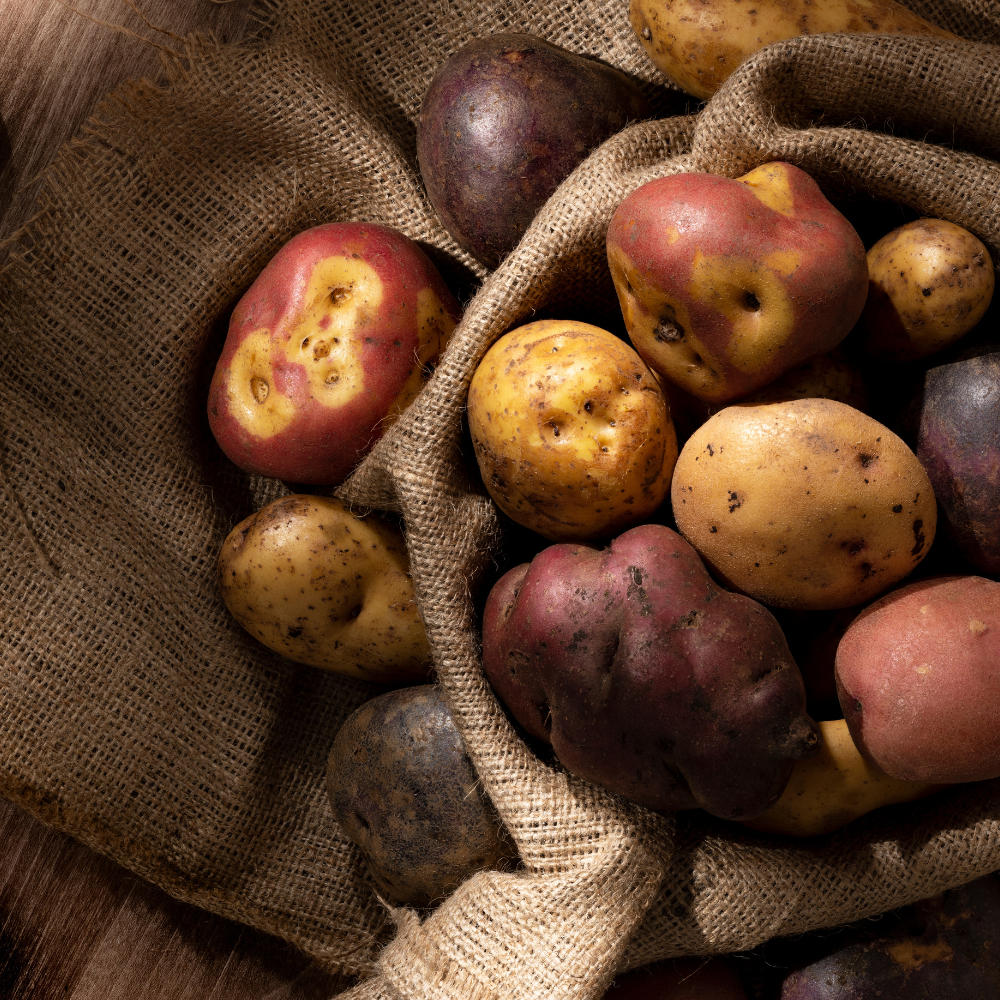
The potatoes we provide are indigenous to the Andes Mountains and, in addition to being organic, have not been genetically modified.
The potato, one of the four main components of human nutrition alongside wheat, rice, and corn, is grown in over 160 countries. Notable producers include China and India.
However, the question remains: are we consuming non-genetically modified potatoes? Are the potatoes we eat native to their original varieties?
The Andes Mountains are home to a vast diversity of native potatoes, with approximately 3,500 to 4,000 varieties. Potatoes originated in the Andes of South America around 8,000 years ago, where they were first cultivated by local civilizations.
In the early decades of the 20th century, scientists began combining genes from conventional potatoes with those from wild varieties to achieve pest resistance. As a result, most of the potatoes grown and consumed today are the product of extensive testing and crossbreeding, leading to the development of transgenic, hybrid, and mutant potatoes.
The potato tuber is composed of approximately 80% water, 18% carbohydrates, and 2% protein.
Potatoes contain several nutrients, including carbohydrates, fiber, B vitamins, vitamin C, potassium, and magnesium.